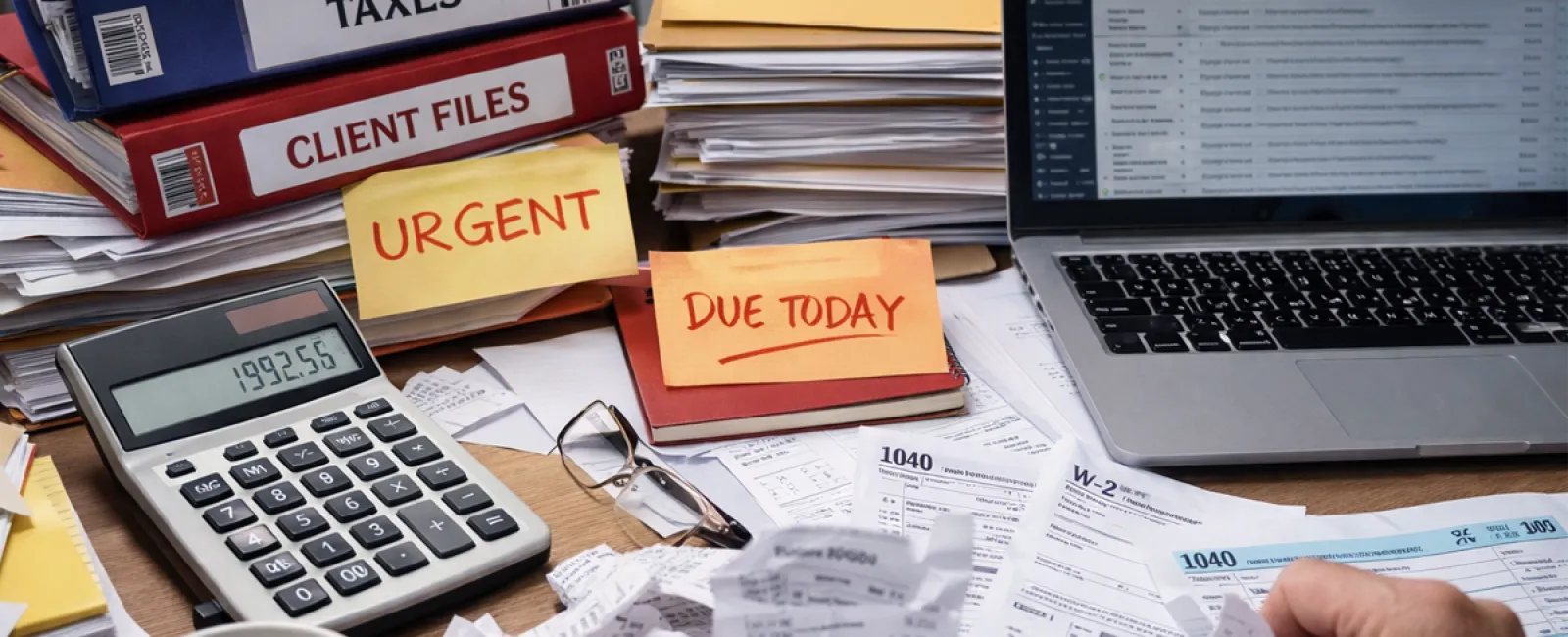
It's March — the peak of tax season.
Your accountant is overwhelmed, your bookkeeper is rushing to keep up, and deadlines are closing in fast. Emails flood inboxes faster than anyone can manage.
Everyone is heads-down, just pushing to make it through the month.
Sound familiar?
Hackers are well aware of this chaos too.
Studies in cybersecurity show a sharp increase in phishing scams during tax season, with March alone seeing about a 28% rise in tax-related scam emails compared to calmer months. These scam emails are crafted to blend seamlessly with legitimate business communication, arriving right when people are most distracted.
This isn't happenstance. It's deliberate timing.
Here's what to expect — and four straightforward ways to shield your business from becoming an easy victim.
The Pressured Supply Chain
Here's what most overlook:
Hackers don't just target accounting firms directly.
They capitalize on the surrounding chaos and pressure.
During tax season:
- Clients hurriedly send sensitive information
- Staff cut corners on verification to keep pace
- "Just send me the file" replaces usual caution
- Verification steps get skipped amid overwhelming workloads
The entire ecosystem speeds up — and that's when errors happen.
Hackers don't prey on calm, meticulous organizations.
They hunt busy, distracted teams.
March is precisely that kind of month.
How These Attacks Appear
This isn't fiction.
These phishing emails mimic legitimate correspondence you receive daily.
- A message purportedly from "your accountant" requesting W-2s again due to delivery issues
- A vendor claiming their bank details changed and asking you to update records
- A DocuSign notification demanding your signature on a tax document "today"
- An urgent plea from "your CEO" traveling and needing immediate assistance
None of these raise suspicion at a glance.
They feel like typical March business.
That's why they succeed.
Why Busy Professionals Fall for These Scams
This isn't about carelessness.
It's about human nature.
When inboxes overflow and deadlines press, people skim, assume, and react quickly without thorough review.
Scammers exploit this behavior.
Their emails are cleverly designed to deceive those moving too fast to detect a subtle inconsistency. They don't need recklessness — just haste.
And in March, everyone is rushed.
Four Practical Steps to Avoid Becoming an Easy Victim
The good news: you don't need advanced tech or a security team to lower your risk.
Just adopt a few mindful habits during busy periods.
1. Always verify payment changes by phone
If you get an email saying a vendor's bank information has changed, never reply directly.
Call the vendor using a known number to confirm the update.
This simple habit wards off many costly scams.
2. Take your time with sensitive information requests
Urgency should prompt caution, not haste.
If someone demands immediate access to W-2s, tax files, or financial data, pause and verify.
Authentic senders understand a brief delay; scammers don't.
3. Confirm "urgent" requests via another channel
If an email declares urgency, double-check through a quick call, text, or internal message.
This quick verification can prevent costly mistakes.
Real emergencies stand up to a two-minute verification; scams collapse.
4. Alert your team about scam risks
This week, remind your team that tax season is a prime window for scams.
Encourage them to slow down, verify details, and ask questions if something feels off.
Creating a culture of caution can save you from messy cleanups later.
Summary
Tax season is demanding; don't make "falling victim to a scam" part of your story.
These attacks aren't sophisticated — they're perfectly timed.
They exploit haste, assumptions, and the collective push to get through March.
You don't need to overhaul your systems.
Just slow down when pressured and confirm urgent requests.
That simple approach often prevents attacks.
Busy-Season Security Check
Your business might already have protective routines in place — if so, great.
If tax season tends to push your team into reactive mode or you're unsure how they handle urgent requests under stress, a quick security review is wise. Schedule a free 15-Minute Discovery Call with us.
No gimmicks, just a straightforward assessment to identify small habit changes that prevent big problems during peak season.
If this message doesn't apply to your business, please share it with someone who might benefit.
Click here or give us a call at 877-310-0123 to schedule your free 15-Minute Discovery Call.